Mount Kilimanjaro
The Roof of Africa — the highest free-standing mountain in the world and Tanzania’s crown jewel.
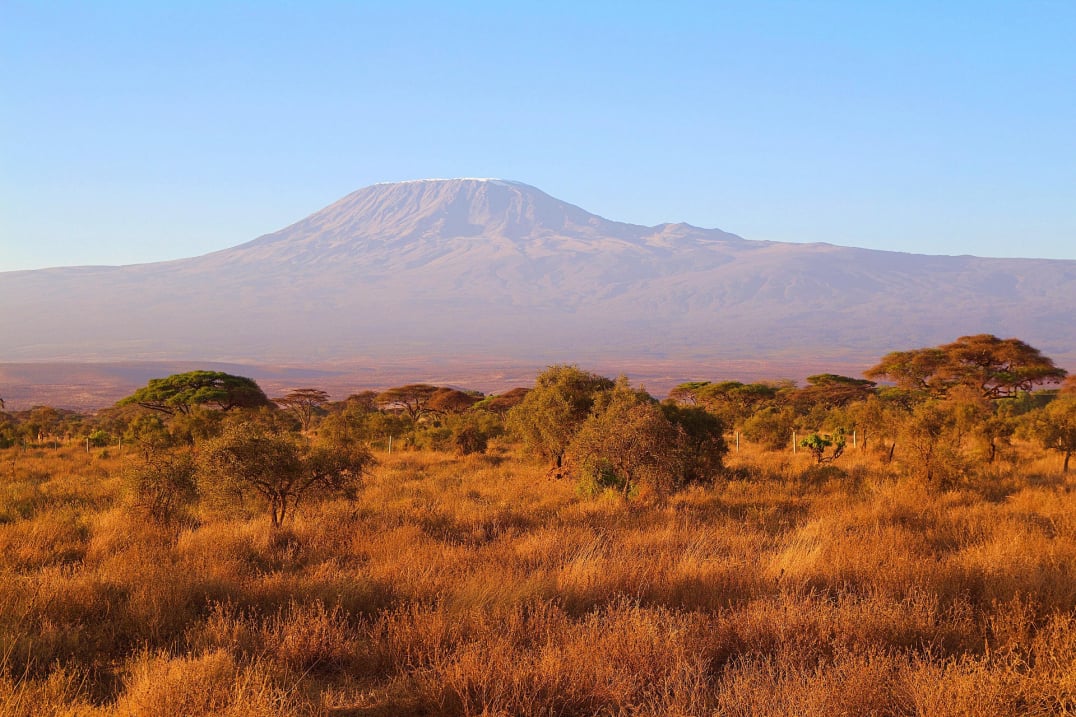
Overview
Mount Kilimanjaro rises majestically from the plains of northern Tanzania, reaching an elevation of 5,895 meters (19,341 ft). It is the highest peak in Africa and one of the most iconic trekking destinations in the world. Comprising three volcanic cones — Kibo, Mawenzi, and Shira — the mountain offers a dramatic range of ecosystems, from tropical forest to alpine desert and glacial summit.
Kilimanjaro is part of the Kilimanjaro National Park and a UNESCO World Heritage Site. Its breathtaking landscapes and accessibility (no technical climbing required) make it a bucket-list adventure for trekkers across the globe.
Weather & Climate
Due to its height, Mount Kilimanjaro features a wide range of climates — from tropical at the base to arctic at the summit. Temperatures vary greatly by altitude, with warm, humid forests below and freezing conditions at Uhuru Peak.
- 🌡️ Base Temperature: 20–30°C (68–86°F)
- ❄️ Summit Temperature: -7 to -20°C (19 to -4°F)
- 🏔️ Elevation: 5,895 m (19,341 ft)
Quick Facts & Best Time to Visit
- 📍 Location: Northern Tanzania, near Moshi
- ⛰️ Type: Dormant stratovolcano
- 🥾 Popular Routes: Machame, Marangu, Lemosho, Rongai, and Umbwe
- 🏞️ UNESCO Status: World Heritage Site (1987)
The best time to climb Kilimanjaro is during the **dry seasons**, from January to mid-March and June to October, when skies are clear and trails are less muddy. Trekkers can experience diverse landscapes, from rainforest to snow-capped summit, all within one unforgettable journey.